Wednesday, November 2, 2011

Kindergarten Book Shopping Lists

Some of you may be finishing a reading unit of study that supports young readers to reread familiar picture books like Corduroy, The Three Billy Goats Gruff, or Caps for Sale by looking at the pictures and telling the story.  Now, through lots of repeated shared reading activities your students are probably ready to reread these familiar shared reading texts.  If you need some recommended titles for familiar shared reading or teaching ideas, see the list in this post from last fall.  Some kids too may be ready to read higher level books in your classroom library. 

You may be wondering how to manage and support these different needs.  I like to give kids personal shopping lists to keep in their book boxes or baggies.  Then, on the days they go into the library to shop for books, they will know how many books to choose from the different baskets. 


Here is a photo of one such bookmark from an inclusive kindergarten classroom.  Special thanks to the teachers Mia and Lisa.

Happy Book shopping everyone!

Thursday, October 13, 2011

Build Reading Stamina

Hello Readers,

I've been talking with lots of teachers lately about building reading stamina in the reading workshop.  We have been thinking about ways to help kids enjoy their books and read for long chunks of time.  We know how to show kids how long they read each day by building a tower of cubes to represent how many minutes we read and we know we can make a bar graph so kids can see their reading stamina growing across time.  In addition, we are using a few tools that I thought would be helpful to share.

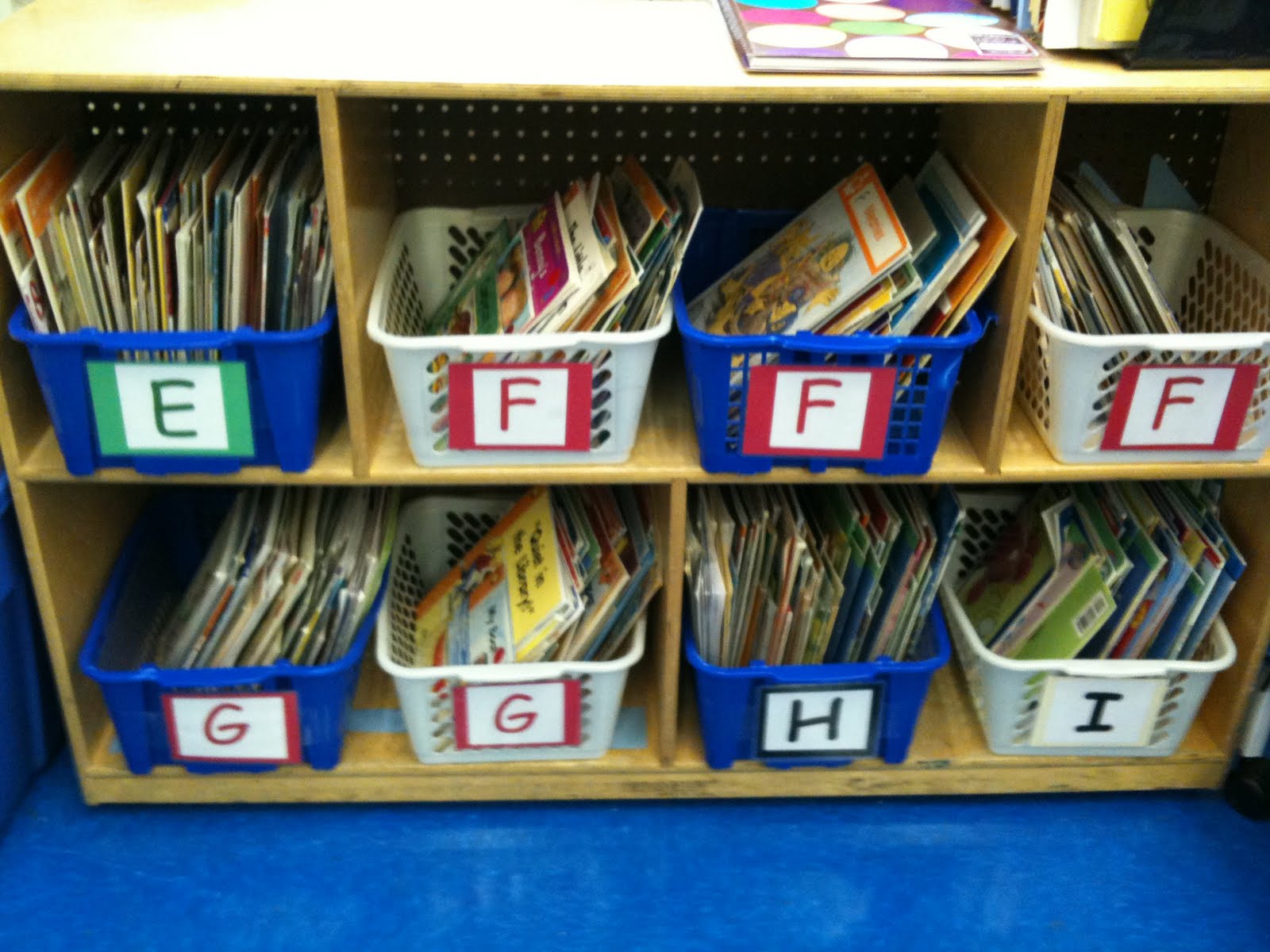
We are creating welcoming and comfortable reading spaces in our libraries so kids can shop for plenty of books.  Two pictures are shown below.  One is for a series section in a library and the other is a leveled book section.


Next, we have been thinking lots about reading goals with kids.  Emily has this chart hanging in her room to help her chapter book readers set goals for themselves and their reading for the week.  This could be helpful for second and third graders who are getting into longer texts.
Setting goals and monitoring progress toward those goals with a reading log is crucial to maintaining stamina.   We can confer with the logs and notice if kids stick with a book, how long it takes them to read a book, and their preferences for certain genres and authors (and their understanding of each genre).  It also helps us see how long they have been reading at a given level and if they struggle to maintain stamina when they move on to the next level. I like kids to keep all of their reading logs for an entire year in a folder so we can reflect together about the kind of reader the child has grown to be throughout the school year.  A sample of one of these logs is seen here.


I think a chart to help kids build stamina and get back into their reading when it feels difficult is also important.  Here is one that a second grade class built together:


I hope you are all off to a strong start to the school year!  More posts will come in October!  I've got some things to share about Small Moments units and partner talk time during the read aloud.  I'll be back soon.

Sunday, September 11, 2011

Literacy Classroom Photos

Are you a literacy coach or reading teacher looking to remake your classroom or small office space?

Maggie, a teacher in Brooklyn wanted to create a space that would allow for these two things:

  • a place for teachers to gather and plan curriculum
  • a place to teach small groups of students who need more support in reading and writing

She worked hard, with an incredible team, to create a classroom make-over.

Above:  Curriculum mapping board.  Tables for teachers to gather are in front of this board.


Above:  List of PD workshops, locations, and directions.  
Dates for on-site PD will be listed on the posters at the bottom of the board.


Above:  Maggie, seated in front of the professional text shelves.  
Her meeting area for the kids is behind this shelf and books for their classroom library are on the opposite side of this tall shelf as well as in a lower set of shelves that run perpendicular to this one.  
This shelf breaks the room into two zones, one for kids and one for teachers.

Above:  Each teacher has a pocket to hold notecards.  Teachers can jot the titles of the professional books they need and place the notecard in their pocket so texts can be located and shared.

Above:  This is the shelf opposite the professional text shelf where Maggie was seated in the other photo.  These shelves contain baskets for series books as well as nonfiction topics.  
Maggie also has a few bins for mentor text to use in writing workshop as well as genre specific read aloud books she knows she wants to use throughout the year.


You can give your literacy room or coaching room a makeover too!  Here is how we started.  First, we asked a key question and we gathered lots of answers to it.

Question:  What do we want out of this space?

Answers:

  • Meeting area for kids to gather with comfortable seating and an easel or smart board for teacher.
  • Classroom library that supports the needs of the students and has clearly organized bins.
  • Writing center with paper choices and revision tools that support the needs of the students and has clearly organized zones or buckets.
  • Bulletin board to display student work.
  • Tables for students to work independently and with partners.
  • Folders and folder hold areas for students to keep their work and have access with independence.
  • Bulletin board to post workshop dates and on-site PD notices.
  • Bulletin board to display curriculum maps and units of study resources.
  • Tables for teachers to gather with writing tools at the center.
  • Bookshelves with professional texts for teachers and a bulletin board with pockets for teachers to jot the titles of the books they check out and take into their own classrooms.
Then, we divided the work into the zones, each took on tasks, and stuck true to our needs to have all the things we wanted in the room with no clutter.

I hope you enjoy your own classroom makeovers.  Have a super week everyone!

Tuesday, September 6, 2011

Morning "Do Now" in a Workshop Classroom

Are you thinking about the first 5 minutes of your school day and wondering how you can get everyone in the room, unpacked, and started with academic work quickly?

Or are you wondering how you can fit all the academic work you want to into a school day?  Thinking through your morning "Do Now" routine may be helpful.

Of course many of us begin our day with attendance, collecting notes, and then sitting down for a morning meeting at the rug.  We can keep our kids working hard during these first 5-10 minutes before the morning meeting - and we can give them meaningful work to do.


I like to start the school day in Pre-k and K (and even first and second grade) with 5-10 minutes of an academic activity that gets kids talking, and capitalizes on their morning energy.  Here are some options you may want to try:


  • 4-6 Kids a day do their book shopping for reading workshop.
Remember to keep this schedule posted so students know their shopping days.  I like to invite the books shoppers to enter the classroom first, so they can unpack and get 5-10 minutes for book shopping in the classroom library.


  • Storytelling time with partners.  

Kids often come to school wanting to tell teachers stories and so giving them a few minutes in the morning to sit at the rug and tell stories is powerful - and it helps them plan stories for writing workshop. I have seen teachers teach kids to hold out their three fingers and tell stories across fingers (just like we do in writing workshop) each morning.  Kids sometimes retell old favorites - and even stories from the classroom.  Some teachers keep a box of field trip photos handy to help kids tell stories.  This picture shows a drawing from a story some kindergarten kids told about a fire drill.


  • Singing a song or reading a poem together at the rug.
Teachers can give students the job of pointing to the words of the song or poem on a chart/smart board. The guest pointer can start the music and use the pointer.  As kids come to the rug, they can join in the singing or chanting.


  • Word Study Sorts
Click here to see the posting on teaching word study sorts to help you get word study up and running.  Then, once it is running smoothly in your classroom, invite students to do their sorting first thing when they enter the room.

Thursday, September 1, 2011

Thank You Teachers!

Read Write and Play is celebrating its first birthday and the milestone of 100 followers thanks to all of you dear readers.

This summer was filled with more and more of your thoughtful questions, great stories, and beautiful cities.  I celebrated hard work in person with teachers in Wisconsin, Texas, and Seattle.  I met teachers from all over the country as well as teachers from schools in South America, Asia, Africa, Europe, and Australia at the summer institutes at Teachers College.  I can see all of you from all corners of the globe looking at pictures here on the blog.  Thank you for being part of this community.

I wish you all a great school year and many happy stories with your students.  I'll be here and will continue to post all the things that inspire my teaching as well as the teaching I see in your classrooms that inspires me.

I took this picture at the Ace Hotel after having dinner with some of my teacher friends in NYC this summer.  I think it will be my back-to-school mantra.  It reminds us all to dig deep, take a risk, and teach our hearts out.

Happy New Year Everyone!  Here is to you and another great year of sharing great stuff from our reading, writing, and choice time workshops!

Saturday, August 6, 2011

Classroom Library Organization

Hello Teachers,

It is August.  Time to enjoy the summer breeze and begin to think about your classroom environments once again.  I want to devote some posts this month to organizing our classrooms to support student independence.  I can see that you like the classroom library photos, so I will post a few more of those today.  Many thanks to Phyllis for allowing me to share these photos from her classroom.  Click here to see more classroom library pictures.


A few tips for your library:
  • Put out the books your students in need.  The baskets should represent the range of readers in your room.  


  • Make sure the labels on the books are clear and consistent.
  • Sort your nonfiction books into baskets with interesting categories and invite your students to make and resort the baskets with you.  I like to have the books in these nonfiction baskets leveled when possible.

  • You can place author bins and other topical baskets on separate shelves (for example, an "Authors We Love" shelf, a "Partner Reading" shelf, and an "Ideas We Love" shelf) so kids understand the organization.  You may want to unveil this section and these baskets after you read books with these favorite authors and themes (perhaps in read aloud or in a unit of study that involves partners reading the same books) so kids know how to browse these sections, how to look and pictures and retell the stories, and where to put them back when they are finished.


Saturday, July 2, 2011

Summer Reading Lists for Kindergarten, First, and Second Grade Readers

Hello Teachers and Families,

I read a comment this week from a follower wondering about summer reading lists for young readers and I wanted to follow up with a few suggestions to keep young and budding readers reading over the summer.  It can be tricky to find leveled books to match the needs of our youngest readers.  I have a few series suggestions for teachers and families.  First, check your child's report card to see if the teacher mentioned a reading level.  If you aren't sure the level, read a few of these series to your child at the bookstore or the library and you'll be sure to find the right match when your child begins to read along with you.  I like to recommend series books for the summer because once a reader is hooked, he will have plenty of books to read!  In other words, it builds stamina easily.

Piggy and Dad


Books that you can easily find at your child’s independent reading level:
Level C and D Readers: 
Brand New Readers Series
click here for information about ordering.  My favorite characters are Piggy and Daddy, Worm, Termite, and Mouse.  Adults will even find these simple books laugh out loud funny.  

Level E and F Readers:
Puppy Mudge Series by Cynthia Rylant
Tiny Series by Cari Meister
Kipper Series by Mick Inkpen

Level G and H Readers:
Turtle and Snake Series by Kate Spohn
Biscuit Series by Alyssa Satin Capucilli
Fly Guy Series by Tedd Arnold


Level I and J Readers: 
Dragon Series by Dav Pilkey  
Poppleton series by Cynthia Rylant

Henry and Mudge series by Cynthia Rylant
Fox Series by Edward Marshall


Level K and L Readers
Commander Toad by Jane Yolen
Arthur Series by Lillian Hoban
Frog and Toad series by Arnold Lobel
Pinky and Rex series by James Howe

 
Some websites that will support oral language development and nonfiction reading:

National Geographic for Kids http://kids.nationalgeographic.com/kids/
 PBS Kids http://pbskids.org/ 


And, if you are planning for summer bookstore or library time this week to get out of the heat, here are some books that kids and adults love to talk about together.  Remember that your kids are NEVER too old for read aloud.  They love hearing the sound of your voice and talking about books with you!  Happy reading!
Read Aloud Titles:
Keller, Holly  Sophie’s Window.  Greenwillow, 2005.
Fleming, Denise. Buster. Henry Holt, 2003. Ages 4 - 7
Montenegro, Laura Nyman. A Bird About to Sing. Houghton Mifflin, 2003. Ages 5 – 8
Hopkins, Lee Bennett, editor. Hoofbeats, Claws & Rippled Fins: Creature Poems. Illustrated by Stephen Alcorn. HarperCollins, 2002.
O'Connell George, Kristine. Little Dog Poems.
Marshall, James.  George and Martha.  Houghton Mifflin, 1974.
Marshall, James.  George and Martha Round and Round.  Houghton Mifflin, 1991.
Marshall, James.  George and Martha One Fine Day.  Houghton Mifflin, 1982.
Waber, Bernard.  Bearsie Bear and the Surprise Sleepover Party.  Houghton Mifflin/Walter Lorraine Books; Reprint edition.  2002.